From Oral Histories and Into Better Programming.
We listen to the women history leaves out.
The Refugee Archive focuses on displaced single mothers and female-headed households living in active conflict and displacement. These are women raising children through war, instability, and loss, largely uncounted, rarely consulted, and almost never heard in the rooms where decisions get made. We exist to change that.
We collect stories the right way.
Our oral histories are long-form, trauma-informed, and consent-led. We work through locally trusted partner organizations, with embedded field researchers who build real relationships before anyone picks up a recorder. Interviews unfold across multiple sessions, giving women time, space, and full control over what they share and how.
We turn testimony into action.
We preserve and translate these oral histories into research, education, and advocacy — through country-based Story-to-Action Labs, a student-led policy tracker, an annual journal, and direct engagement with practitioners, researchers, and policymakers. The goal is not just to archive these voices. It's to make sure they shape the programs and policies that affect these women's lives.
8 Labs 30 Hours Recorded 9 Countries 5 In-Country Partners Est. Dec 2025
Each country. Its Own Story-to-Action Lab.
Every country gets its own portfolio — not a template.
Each Story-to-Action Lab brings together all of our work in one country: oral histories, education, research, and policy engagement. We adapt everything to local geography, law, culture, language, and available resources. The same core model, built differently every time because it has to be.
This work is grounded in relationships, not fly-in projects.
Every Lab is co-run with grassroots partners and local leaders who know the communities we work in. Our staff and field researchers are organized by country, which means the people doing the work live closest to it. That's not a policy, it's the only way this works.
Oral History of the Month: May 2026
What happens when the future you imagined for yourself disappears almost overnight?
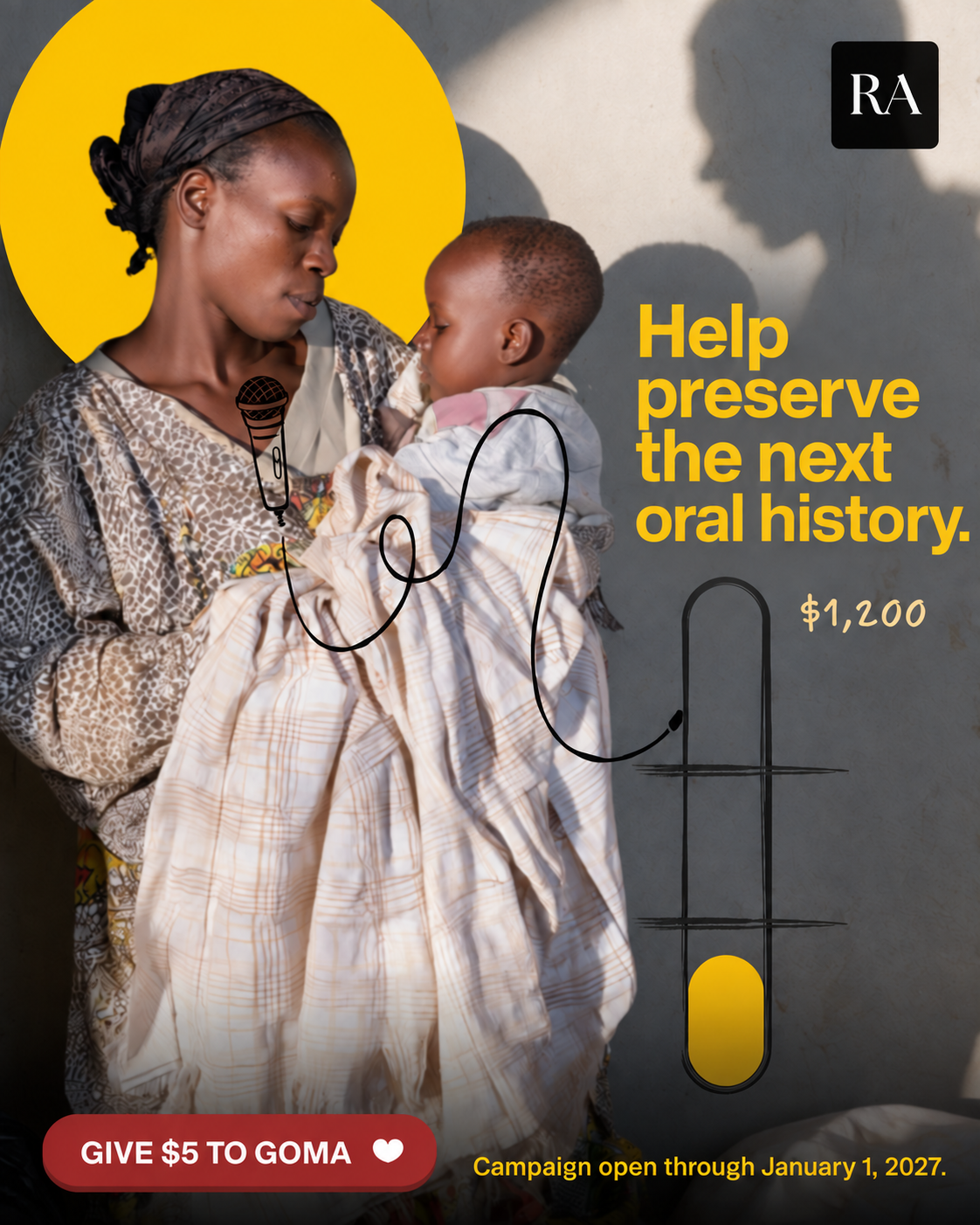
In this second chapter of Ruth’s oral history from eastern Democratic Republic of the Congo, she speaks about becoming a young woman, experiencing love for the first time, and the events that led her into single motherhood.
What began as a relationship built on trust slowly became isolation, abandonment, and survival. Ruth reflects on pregnancy outside marriage, family rejection, domestic violence, and the emotional weight of raising a child largely on her own while trying to continue her education and survive financially in Goma.
Why This Story Matters
Across many conflict-affected communities, women often carry the consequences of abandonment, stigma, and economic instability alone.
Ruth’s story shows how quickly education, identity, and security can become fragile, and how motherhood reshapes survival itself. Her testimony also reveals something rarely documented with honesty: the emotional and social realities faced by young single mothers navigating family rejection, violence, and financial hardship while still trying to build a future for their children.
Join Us