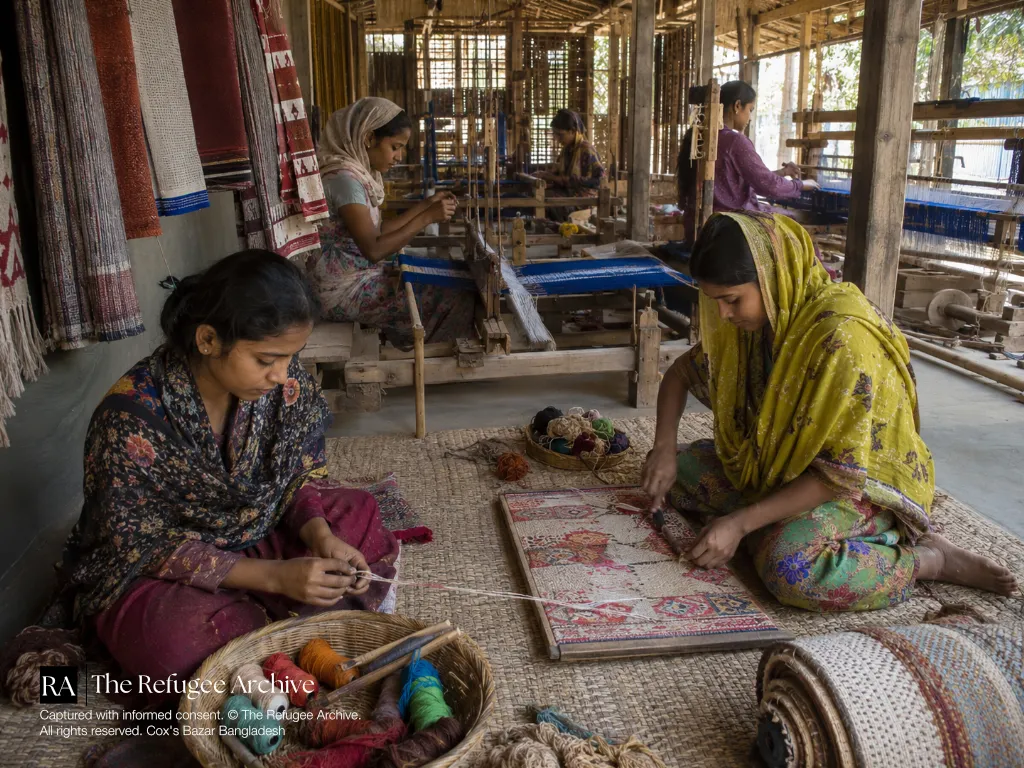
What Are Female-Headed Households? Understanding the Lives of Displaced Single Mothers
Around the world, 117.8 million people were living in forced displacement at the end of 2025, according to UNHCR’s Global Trends 2025. That is more than one in every 70 people on Earth. UNHCR Global Trends 2025
To picture that number, think of the Philippines. The Philippine Statistics Authority counted 112.7 million people in the entire country in its 2024 Census of Population. The world’s forcibly displaced population is roughly five million people larger. Philippine Statistics Authority 2024 Census
Yet displacement is not experienced as 117.8 million people at once. It happens household by household. A family still needs somewhere to sleep, food the next morning, money to live on, medicine when a child becomes sick, documents that may have been left behind, and a way to keep children learning. In many displaced families, much of that responsibility rests with a woman.
What Is a Female-Headed Household?
A female-headed household is a family in which a woman is recognized as the person leading the household. But the term covers very different lives. She may be a single mother or a widow. Her partner may be missing, separated from the family, living somewhere else, or unable to support the household. She may also be caring for parents, siblings, grandchildren, or other relatives.
This is why a female-headed household is not automatically the same as a single-mother household. Even the World Bank cautions that countries do not all define or measure household headship in exactly the same way.
The label tells us who leads the household. It does not tell us how much she is carrying.
When Ordinary Problems Become Harder
Displacement can turn simple tasks into difficult choices. A mother may find work but have nobody to watch her children. Food assistance may exist, but reaching it can mean paying for transportation or spending hours away from home. A clinic may be open but still be too expensive to reach. A child may be ready for school while the family is still trying to replace documents lost during displacement.
These are not extraordinary problems individually. The pressure comes from having several of them arrive together, often with one person expected to solve them all.
There is no reliable global figure showing how many of the world’s displaced households are headed by women. The data is simply not collected consistently enough to make that claim responsibly. But individual countries show how significant these families can be. In Colombia, for example, 65 percent of displaced households are female headed, according to a recent UNHCR factsheet. UNHCR Colombia displacement factsheet
That figure should not be applied to the rest of the world. It does, however, challenge the idea that women-led families are a small group at the edge of displacement.
Needing Support Is Not the Same as Being Powerless
Displaced single mothers are often described by what they lack: housing, income, food, protection, or support. That is only part of the picture.
The same woman seeking assistance may also be earning money, negotiating rent, caring for children, finding services, managing documents, helping relatives, deciding whether the family should stay or move again, and trying to make tomorrow feel slightly more certain than today.
A person can need help and still be the person everyone else depends on.
That distinction matters because the language used to describe displaced women eventually shapes how the world remembers them.
At The Refugee Archive, we preserve oral histories from displaced single mothers and women leading households because a humanitarian record can tell us that displacement happened. The women who lived through it can tell us what it required of them.
The numbers show us the size of displacement.
Their voices show us its weight.