Who We Are
We are a collective team that exists to listen, learn, and advocate alongside displaced single mothers and women-led households as they navigate displacement and raise the next generation.
Field & Policy Teams
Our on-the-ground researchers and policy trackers working directly within the regions we serve to gather and verify critical human data.
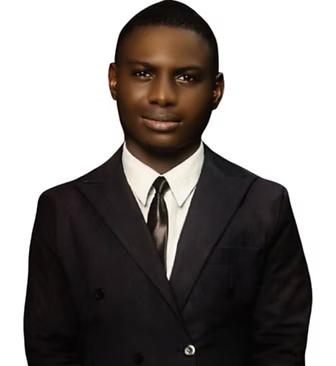
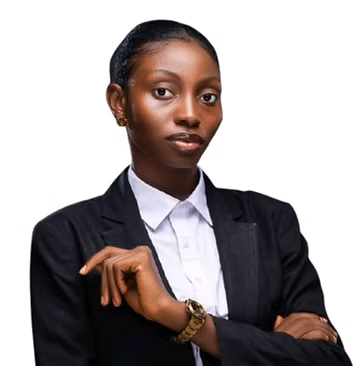


Journal Editing Team
The academic and professional minds responsible for rigorously reviewing and curating the only peer-reviewed journal dedicated exclusively to displaced single mothers.


In-country
NGO Partners
Working hand-in-hand with incredible grassroots organizations directly embedded in the displacement settings we are documenting.
 Nigeria
Endam Home of Hope
Vocational skill training, temporal shelter, GBV advocacy, and climate-adaptive agriculture.
 Bangladesh
Ziabul Hossain Foundation
Address barriers that put youth and women at risk of violence and exploitation.
 Democratic Republic of the Congo
PCR Foundation
NGO for peace, education, trauma, & community reconciliation.
 Uganda
Tumaini for Refugee Women
Empowering women, young girls, and youth to achieve their full potential.
 South Africa
ARWNET
A network that brings together refugee women and migrants to amplify voices.
Mission
Our mission is to preserve the oral histories of displaced single mothers and female-headed households living in active displacement (refugee and IDP settings) and translate testimony into research, education, and country-based work that improves protection, gender equality, and program design.
Vision
We envision a world where displaced single mothers are heard, their histories are protected, and their voices shape the programs and policies meant to serve them.
The Board
Academic Affiliations

Georgetown University
Washington, DC

Rev. Fr. Moses Orshio Adasu University
Makurdi, Nigeria
Hello
Hello, I'm Kristi Dawn Riggs. I'm the Founder and Executive Director of The Refugee Archive, where I lead the design and direction of our oral history methodology, our field partnerships, and our work translating testimony from single mothers and female-headed households living in active displacement as refugees or IDPs into research, policy input, and public understanding.
My Background
I bring field and institutional experience to this work, including a prior UNICEF field contract in Timor-Leste and program experience across Southeast Asia, the Middle East, and Sub-Saharan Africa. I am currently an ABD doctoral candidate at Georgetown University, where my research examines Syrian refugee female heads of households in Jordan at the intersection of narrative, policy, and livelihood. That research is the methodological foundation for The Refugee Archive's oral history model.
Why I Started This Work
The Refugee Archive was built on a simple premise: women who head their own households in displacement should be the primary source on their own lives, not a data point collected inside someone else's framework. I founded the organization after a summer in Amman, Jordan, studying Arabic and teaching English, where I spent time with Syrian refugee women whose lives were documented in reports but rarely recorded in their own words.
Much of the existing evidence base on female-headed households in displacement is written from the outside. UN and government data consistently document their economic and physical vulnerability in aggregate, but that data was never designed to capture how single motherhood is understood, or misunderstood, inside camps, conflict zones, and militia-controlled areas, where mothers raise children without a husband or predominant male family member present. That gap shapes whether women are included in programming, protection, and policy decisions built around them.
Without a woman's background, beliefs, and traditions documented alongside her present circumstances, programs and policy keep misreading what actually shapes her survival. That cost doesn't stop with her. Children absorb the stigma of a status the system never fully understood, learning to see their mother, and themselves, as "less than" or unsafe.
What The Refugee Archive Does
The Refugee Archive collects long-form oral histories through a trained, structured methodology and preserves them as primary-source evidence, not just narrative content. We analyze testimony across cases to surface patterns in how displaced female-headed households experience aid systems, make survival decisions, and understand their own status, then translate that evidence into public narrative, applied research, and policy-relevant analysis for researchers, humanitarian organizations, and institutional partners. The goal isn't representation for its own sake. It's putting evidence that women generate and own directly in front of the people who design the programs and policy governing their lives. I expect to complete my doctorate in 2027, and I built The Refugee Archive to be a durable, research-grade platform for a population whose expertise on their own survival is rarely treated as expertise at all.
Hello
Hi, I’m Ian. I help make The Refugee Archive easier to find, understand, and trust online. I manage our social media and digital systems, which includes planning content, creating graphics, building and maintaining websites, supporting CRM workflows, tracking analytics, and handling the technical pieces that keep digital work organized behind the scenes. I also work as a consultant for businesses and organizations, helping them improve their branding, online presence, customer systems, and day-to-day digital operations. My work combines creative communication with practical technical skill, so the stories, programs, and people behind the mission are supported by systems that are clear, credible, and built with care. I have certificates and certification-based training across Google, GitHub, and HubSpot, and I continue to strengthen my skills through AWS certification pathways, professional seminars, and related digital tools, bringing a disciplined and accountable approach to the systems entrusted to our team.
My Story
I grew up in a deeply traditional culture shaped by Igorot ways of life in the Philippines. That environment taught me resilience and respect for where I come from, but it also exposed me to expectations and forms of patriarchy that once felt normal simply because I had not yet learned to question them.
Education changed that. Through school and editorial writing, I began to understand that tradition and change can be held in honest tension, and that words have power: they can reinforce injustice, challenge it, or help someone see the world differently. Writing became one of the first ways I learned to stand against inequality.
My interest in science, technology, and digital media grew alongside that advocacy while I continue taking my undergraduate program in STEM. That academic path continues to shape how I think, solve problems, and build systems. I learned to develop skills across strategy, programming, database organization, automation, analytics, and technical operations because I wanted to understand how information moves and how digital platforms shape public awareness.
At The Refugee Archive, my advocacy and technical work come together. I may not share the same lived experiences as the women whose stories we carry, but I believe deeply in the responsibility to help those stories travel with dignity, clarity, and care. I use my voice and skills to support the work, not to speak over it, but to help make sure the world listens.
Hello
I’m a Digital & Content Designer and Manager at The Refugee Archive, where I design and manage multimedia content. If you’ve watched a video, seen a graphic, or read a story from The Archive Speaks, chances are I had a hand in it!
I work closely with Story to Action Lab partners to help bridge the gap between those who hold the stories of displaced women and the people who need to hear them. Through editing, design, and thoughtful storytelling, I turn these narratives into accessible, digestible pieces for the Archive.
My Story
I grew up in a matriarchal household, surrounded by strong, professional women whose leadership and resilience were simply a fact of life. Because of this, I didn’t initially realize how differently women were perceived and treated outside our home, until I encountered it myself. That awareness became the foundation of my advocacy for women’s rights and my commitment to challenging gender roles through storytelling and design.
My passion for journalism and creative expression began early, from my first show-and-tell at four years old to becoming a competitive writer throughout elementary and high school, eventually representing my schools at Schools’ Press Conferences. I later pursued Broadcast Communication at the Polytechnic University of the Philippines, where I combined writing with design, illustration, and music production.
In university, I became an advocate for SOGIE rights through student organizations and wrote “Bayad Po,” a song about defying gender roles that received multiple awards across universities. During the pandemic, I volunteered as a journalist and illustrator for student publications, documenting injustices faced by women and queer communities.
Since 2020, I have worked as a Digital & Content Designer and Manager across industries—from AI startups to real estate—and later as a design and content managing assistant to an executive at Jasper, a pioneer AI writing platform. There, I learned to build ethical, AI-supported systems that amplify, rather than replace, the work of journalists and designers. (Also, bring back em dashes!)
Today, this journey informs my work with The Refugee Archive. And I believe stories should be told with consent, care, and dignity; centering women, queer communities, and displaced voices while honoring their agency and lived experience.
Hello
David “The Eagledeye” Oletu is Regional Director for Africa at The Refugee Archive, where he works with Story to Action Lab partners in the Democratic Republic of the Congo, Nigeria, and Uganda. He builds university partnerships, manages student volunteers, and oversees transcription and data management across the Africa portfolio. David is also the author of Wounds They Couldn't See, Managing Editor of TheDiadem Magazine, and founder of one of Nigeria’s largest teen enlightenment conferences.
My Story
From an early age, I knew I wanted my work to leave a lasting impact on people’s lives. Not to be loud or widely known, but to contribute something meaningful wherever I found myself. Growing up in my small place in Africa shaped this conviction deeply. I saw how easily people’s lives could be misrepresented, flattened into statistics, or spoken about without context. This awareness formed my commitment to ethical documentation, narrative integrity, and responsible storytelling. I believe stories are not just accounts; they are records of lived reality that can restore agency to people whose experiences are often spoken over or erased.
This commitment has guided my work in youth mentorship, publishing, and editorial leadership. Since 2022, I have led Future Generation Enlightenment, a mentoring initiative that works directly with teenagers, equipping them with leadership, career, and life skills while engaging young people at critical and vulnerable stages of life. This work earned recognition from the Lagos State National Youth Service Corps (NYSC) for community impact. Alongside this, I serve in editorial leadership at The Diadem Magazine, a faith-based and social impact publication focused on restoring credible information and hope through nuanced, human-centered reporting. I have written and published over 1,000 articles and short stories, and I facilitate a storytelling workshop that trains younger writers to approach human narratives with discernment, context, and ethical responsibility.
In 2025, I published my debut book, Wounds They Couldn’t See, a collection of short stories that examine hidden trauma, displacement, and the lived realities of African children and families, particularly those shaped by loss, instability, and survival. The book reflects my belief that storytelling must illuminate struggle without exploitation, and reveal truth without stripping people of dignity or voice. This philosophy grounds my work with The Refugee Archive.
As Africa Regional Coordinator, I support the ethical collection and preservation of oral histories from displaced single mothers and female-headed households, contribute to regional documentation and storytelling initiatives, and help strengthen partnerships that center lived experience as evidence. I approach this work as a writer, editor, and listener who understands that when stories are handled with integrity and context, they can challenge harmful narratives, inform policy, and uphold human dignity.
Book Author
Wounds They Couldn't See
David's book, “Wounds They Couldn’t See,” reflects the deepest scars that often remain invisible: hidden behind strong faces, polite silence, or societal rejection. Too often, when children grow and begin to err, we are quick to cast stones or lock them away, forgetting to ask why.
Read TodayBenue State, Nigeria Event
Jan 31, 2026
Makurdi, Benue, Nigeria
Nigeria-based event explored how oral history collection serves as a powerful tool for social advocacy, centering the voices of displaced female-headed households. Hosted by David Oletu, Regional Director of The Refugee Archive in Africa.
Open on InstagramHello
I am Desmond Asakitikpi, Director of Operations at The Refugee Archive. I oversee the operational infrastructure that allows a multi-country team to work clearly, securely, and consistently across time zones. My role connects people, systems, documentation, digital platforms, and archive workflows so that our field, editorial, and partnership work can move with structure and accountability.
I manage our Google Workspace environment, staff workflows, internal systems, email and web operations, platform security, and access protocols. I also train and onboard staff on document retention, security practices, and workflow management, helping build the internal capacity our team needs to handle sensitive testimony with care.
Part of my work includes coordinating our university archive partnership. I manage data transfers, cataloging processes, and compliance requirements that move oral histories from field collection into permanent, ethically maintained university collections. I work with our university partner to support storage, transfer, and access practices aligned with international archiving standards.
My Background
I bring a background in visual media, design, language, and international communications to this role. I studied Foreign Languages at the University of Benin, where my interest in storytelling expanded through language and cross-cultural communication. I came to understand language not only as communication, but also as power: a way to express, preserve, and challenge meaning.
While still a student, I joined CSI-COFSCI, an NGO focused on empowering young people through education, entrepreneurship, and social innovation. As Academic and Media Director, I organized more than 40 learning sessions and workshops on entrepreneurship, digital skills, media, and personal development, reaching over 400 students.
After graduation, I became International Media Director, coordinating communications across multiple African countries and supporting campaigns that bring together creativity, social impact, and community engagement. That work helped shape my approach to operations: strong systems matter because they protect the people, stories, and relationships behind the work.
My Story
Before titles or tools, I have always been drawn to how stories live in images and how meaning can be carried through symbols, illustration, language, and intentional visual choices. Growing up in Nigeria, I loved creating art and sharing stories. Over time, I noticed that many stories, especially African and other marginalized stories, are often misunderstood, oversimplified, or told by people far removed from lived reality.
This awareness shaped my work across digital art, graphic design, communications, and narrative-driven projects. I have contributed to purpose-driven work at both small and large scales, locally and internationally, combining design, research, and communication to support storytelling that is grounded, respectful, and responsible.
My work with The Refugee Archive brings these threads together. I help build the systems that allow displaced women's stories to be preserved, protected, and shared with integrity. I approach this work with care for context, agency, accuracy, and long-term stewardship, because storytelling is not only about visibility. It is also about responsibility: how stories are handled, archived, and understood across cultures and audiences.
Global Advisor
Bill Oldham serves as a Global Advisor to The Refugee Archive, supporting the organization with entrepreneurial and philanthropic perspective.
Global Advisor
Wanda Barquin serves as a Global Advisor to The Refugee Archive, bringing experience in diplomacy, political economy, and international public service.
Global Advisor
Amb. Koby Koomson serves as a Global Advisor to The Refugee Archive, bringing diplomatic leadership and global policy experience.
Profile
Adiatu Mariam Oyenike is a curious and people-oriented professional with a background in quality assurance, French language, teaching, and content-related work. She enjoys learning across fields and turning what she learns into something useful to others.
She currently works in quality assurance for dubbed content, where she pays close attention to detail to identify issues and ensure content meets required standards. She also teaches French and has a strong interest in language, communication, and the ways people share and understand ideas.
Outside her regular work, she has volunteered in transcribing refugee stories, contributing to the documentation of people's experiences. She is also interested in personal development, project coordination, meaningful conversations, and opportunities to learn, contribute, and make an impact.
She describes herself as curious, willing to try new things, and interested in understanding people, ideas, and the world around her.
Profile
Balla Souleymane is an MSc Environmental Science, Policy and Management postgraduate professional with experience in communication, operations, project delivery, and project management.
A polyglot fluent in English and French, among other languages, he is committed to contributing to sustainable development and humanitarian action, particularly through initiatives that tangibly strengthen communities and improve people's lives.
He also brings a commitment to effective altruism and practical community impact.
Profile
Farida Ibrahim-Audu is a Nigerian humanitarian worker, events strategist, and entrepreneur with more than a decade of experience in public-sector service and community-focused initiatives.
She holds a Bachelor's degree in French Studies and a Master's degree in Global Studies. She is a YALI alumna and Fellow of the Institute of Management Consultants (FIMC), Nigeria, and previously served as a political appointee of Kaduna State Government, Nigeria.
Her interests span writing, editing, communication, events, and community development. She authored the book "Queen Energy: The Modern Woman’s Manifesto" and serves as Operations Director of the Kano Real Estate Expo.
Outside her professional pursuits, Farida enjoys travelling, badminton, picnics, and supporting charitable and community-focused initiatives.
Profile
Smridhi Dang supports The Refugee Archive as an Archival Project Volunteer, helping organize, review, and prepare oral history collections for long-term preservation and accessibility.
Profile
Tanisha Bhadury supports The Refugee Archive as an Archival Project Volunteer, helping organize, review, and prepare oral history collections for long-term preservation and accessibility.
Profile
Kelly Samuel supports The Refugee Archive through crowdfunding and outreach, helping connect the organization with the relationships and resources needed to sustain its work.
Profile
Sirsha Gupta is a LinkedIn Writer from India who supports The Refugee Archive by helping shape concise, thoughtful content for professional and public-facing audiences.
Profile
Adriana Agrest is a Volunteer Graphic Designer from Brazil who supports The Refugee Archive with visual materials, design references, and graphics that help present the archive's stories with clarity and care.
Hello
Hello, my name is Armin Seifart. With over twenty-five years of legal experience in both in-house and private practice settings, I have had the privilege of advising multinational companies in energy, banking, telecommunications, and infrastructure, as well as family-owned enterprises located in South America and the Caribbean. My professional journey has enabled me to counsel companies and individuals across numerous industries and continents—including the Americas, Asia, the Middle East, Europe, and Africa—granting me a broad, comparative perspective on complex legal, cultural and business challenges.
I earned my law degree from Boston College Law School and completed my undergraduate studies in International Relations and History at Tufts University. I am a member of the bar and licensed to practice law in the District of Columbia, Florida, and Virginia. In addition to my legal work, I serve as a volunteer Board Director for The Refugee Archive, where I am dedicated to strengthening governance and supporting sustainable organizational growth.
My Story
On a personal note, I was born in Washington, D.C., and have always embraced an international outlook, shaped by my parents’ journey from Paraguay to the United States and their lifelong commitment to development and education through international organizations and government service. This background has continually inspired my passion for cross-cultural engagement and professional excellence.
Hello
Hi, I’m Tom Bradley. I serve as a Director and Global Advisor to The Refugee Archive. I bring 30 years of leadership experience as a senior officer in the U.S. Air Force, along with work teaching leadership and facilitating programs for corporations and government agencies. I’ve also supported nonprofit education and international affairs work through the United Nations Association of the National Capital Area, and I hold a master’s degree in Peace Operations from George Mason University.
My Story
Coming soon.